


【不定项选择题】

某综合楼工程,地下三层,地上二十层,总建筑面积68000㎡,地基基础设计等级为甲级,灌注装筏板基础,现浇钢筋缓凝土框架剪力墙结构,建设单位与施工单位按照《建设工程施工合同(示范文本)》(GF—2013—0201)签订了施工合同,施工单位委托第三方测量单位进行施工阶段的建筑变形测量。

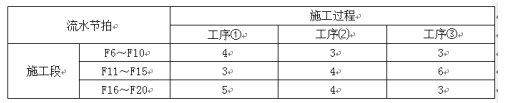
装修施工单位将地上标准层(F6~F20)划分为三个施工段组织流水施工,各施工段上包括三个施工工序,其流水节拍如下表示:

标准层装修施工流水节拍参数一览表(时间单位:周)

手机使用
微信扫一扫
分享
微信内点击右上角“…”即可分享
反馈
收藏
举报
参考答案
参考解析
【不定项选择题】

乔女士持有大唐集团股票100股,预期该公司未来3年股利为零增长,每期股利30元。预计从第4年起转为正常增长,增长率为5%。目前无风险收益率7%,市场平均股票要求的收益率为11.09%,大唐集团股票的标准差为2.8358,市场组合的标准差为2.1389,两者的相关系数为0.8928。

【不定项选择题】

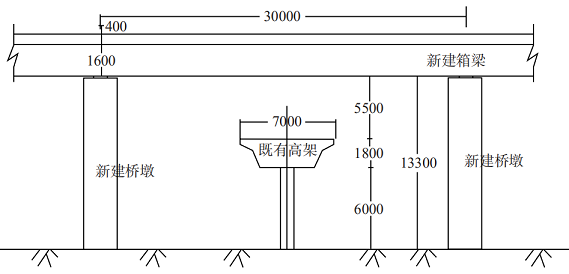
【背景资料】某公司中标一项污水处理厂新建工程。新建工程包括一座曝气池建设,水池长15m,宽9m,采用沉井分节预制排水下沉进行施工,结合前期的地勘报告,项目部分别编制了沉井专项施工方案,以及地基加固处理方案。沉井作业示意图如图2所示。

沉井专项施工方案中有如下内容。
①预制沉井管节的构造配筋宜采用小直径、大间距,并且全断面的配筋率不小于0.3%。
②预制管节的后续各节的模板应支撑于地面上,且模板底部应距地面不小于0.5m。
③沉井封底前应将超挖部分回填砂石。施工过程中,发生如下事件。
事件一:根据地勘报告可知,该土层为低渗透性的土层。项目部在进行沉井封底前,对软弱地基采用 渗透注浆法进行加固处理。项目部在进行注浆加固后立即进行注浆检验,各项指标合格。
事件二:由于前期施工进度缓慢,致使施工工期拖至当地雨期。污水处理厂新建工程的各项构筑物无 抗浮设计,项目部紧急编制雨期抗浮措施方案。

【不定项选择题】

Write an essay of 160-200 words based on the following drawing. In your essay, you should

1)describe the drawing briefly,

2)interpret its intended meaning, and

3)give your comments.

You should write neatly on the ANSWER SHEET. (20points)


【不定项选择题】

甲为支付货款向乙签发了一张丙银行的支票,但是支票金额和收款人处未记载,授权持票人记载。乙将此支票转让给丁,丁又转让给戊。对此,下列表述正确的是 ( )。

A.

 该支票因未记载金额而无效

B.

 只有乙有权补记票据金额,并将自己记载为收款人

C.

 戊请求付款时无须提示承兑

D.

 戊须于出票后 15 日内提示付款

【不定项选择题】

【背景资料】

某承包商的投标工期为18个月,经业主批准的网络计划如图10.2-1所示(单位:月),


其中G工作所需的关键起重设备计划在完成E 工作后周转使用 。根据合同规定,工期每提前或 拖延1d奖或罚1万元 。在施工过程中,由于承包商使用了不合格的材料,致使A工作 需部分返工并拖延了2个月,因为A工作为关键工作,使总工期拖延2个月 。


承包商召开会议研究方案有三种 :

方案一 :仍然按原计划继续组织施工 。

方案二 :另行租赁一台起重设备用于施工G工作,无须等E工作施工完再转到G工作施工,租赁费用每月增加5万元。

方案三:压缩网络图某些关键工作的时间,以满足工期要求,网络图各工作压缩施工时间所花费用及最短施工时间见表 10.2-1


【不定项选择题】

【案例三】

  某高速公路N合同段路基工程施工,工期18个月,其中K23+200~K32+200路段以填方为主,合同段附近地表土主要是高液限黏土(液限值在38~49之间),在较远地带分布有腐殖土、生活垃圾土、盐渍土、淤泥、冻土、砂性土、粉土、黏性土、砾土等。出于控制造价的考虑,业主要求就地取材。为此,施工单位针对高液限土填筑路堤做了试验路段,以确定其最大干密度和松铺厚度等指标。

  施工单位先对路基横断面进行测量放样,待场地清理完毕后动土触探,并绘制出横断面图,提交监理工程师复测,确认后填筑路基。

  施工单位严格按照试验路段提供的数据指导施工,经过2个月的填筑,发现按试骏路段数据控制施工,每层的填筑周期超过5天,在雨期,填筑周期达到15天以上,无法满足工期要求。业主在了解了情况后,书面要求监理工程师指示施工单位在半个月后变更路堤填料。经过现场考查并征得监理工程师同意和设计单位确认后,选择了砾土与砂性土两种路堤填料,施工单位随即组织施工。另外,施工单位还制定了雨季施工的控制措施,保证质量。

  由于变更后取用的路堤填料需增加较长运距,而在合同中没有该变更的价格,整个工程完工后,施工单位向业主提出了变更工程价款的报告。


【不定项选择题】

【背景资料】
某泵站工程主要由泵房、进出水建筑物及拦污栅闸等组成,泵房底板底高程为13.50m,泵房底板靠近出水池侧设高压喷射灌浆防渗墙,启闭机房悬臂梁跨度为1.5m,交通桥连续梁跨度8m。
该工程地面高程31.00m,基坑采用放坡开挖,施工单位采取了设置合理坡度等防止边坡失稳的措施,泵房基坑开挖示意图见图5。粉砂层渗透系数约为2.0m/d。

图5  泵房基坑开挖示意图(单位:m)
高压喷射灌浆防渗墙施工完成后,施工单位根据《水利水电工程单元工程施工质量验收评定标准-地基处理与基础工程》(SL633-2012)对高压喷射灌浆防渗墙单孔的施工质量逐孔进行了施工质量等级评定,并经过监理单位审核签字,其单元工程施工质量验收评定表(部分)如表5所示。
表5  高压喷射灌浆防渗墙单元工程施工质量验收评定表(部分)

【不定项选择题】

(六)阅读材料,回答以下六题。

某股票当前价格为88.75元,其看跌期权A的执行价格为110元,权利金为21.50元,另一股票当前价格为63.95元,其看跌期权B的执行价格与权利金分别为67.50元和4.85元。

【不定项选择题】

案例二
【背景资料】

南方某养老社区占地面积10hm2,设有2hm2的景观湖,社区内设多座养老医疗楼及配套服务建筑,建筑物配套设有空调系统,各建筑物功能及技术参数见下表。

社区周边的市政给水可满足项目两路消防给水及消防给水设计流量的要求。市政消火栓间距120m,其中至少一个消火栓跟社区任一建筑物最远端距离不超过145m,市政给水管进入园区接口处供水压力为0.30MPa,消防水泵从市政给水管网直接抽水。社区管理单位委托消防技术服务机构进行了检测。

【不定项选择题】

Since the days of Aristotle, a search for universal principles has characterized the scientific enterprise. In some ways, this quest for commonalities defines science. Newtons laws of motion and Darwinian evolution each bind a host of different phenomena into a single explicatory framework.

(46)In physics, one approach takes this impulse for unification to its extreme, and seeks a theory of everything--a single generative equation for all we see. It is becoming less clear, however, that such a theory would be a simplification, given the dimensions and universes that it might entail, nonetheless, unification of sorts remains a major goal.

This tendency in the natural sciences has long been evident in the social sciences too. (47)Here, Darwinism seems to offer justification for it all humans share common origins it seems reasonable to suppose that cultural diversity could also be traced to more constrained beginnings. Just as the bewildering variety of human courtship rituals might all be considered forms of sexual selection, perhaps the worlds languages, music, social and religious customs and even history are governed by universal features. (48)To filter out what is unique from what is shared might enable us to understand how complex cultural behavior arose and what guides it in evolutionary or cognitive terms.

That, at least, is the hope. But a comparative study of linguistic traits published online today supplies a reality check. Russell Gray at the University of Auckland and his colleagues consider the evolution of grammars in the light of two previous attempts to find universality in language.

The most famous of these efforts was initiated by Noam Chomsky, who suggested that humans are born with an innate language—acquisition capacity that dictates a universal grammar. A few generative rules are then sufficient to unfold the entire fundamental structure of a language, which is why children can learn it so quickly.

(49)The second, by Joshua Greenberg, takes a more empirical approach to universality identifying traits (particularly in word order) shared by many language which are considered to represent biases that result from cognitive constraints.

Gray and his colleagues have put them to the test by examining four family trees that between them represent more than 2,000 languages.(50)Chomskys grammar should show patterns of language change that are independent of the family tree or the pathway tracked through it. Whereas Greenbergian universality predicts strong co-dependencies between particular types of word-order relations. Neither of these patterns is borne out by the analysis, suggesting that the structures of the languages are lire age-specific and not governed by universals