
命题学习在复杂程度上一般高于概念学习,命题学习必须以概念学习为前提。()
【不定项选择题】


某工程公司承担了波分复用设备安装工程,共有四个站,采用包工不包料的承包方式。项目经理部计划安排两个安装队和一个测试队施工,各站的工作内容、各施工队的施工内容、各施工队的人员及工具和测试仪表配置、施工阶段进度计划如图1L420053-1所示,人员及仪表的使用单价如表1L420053-1所示。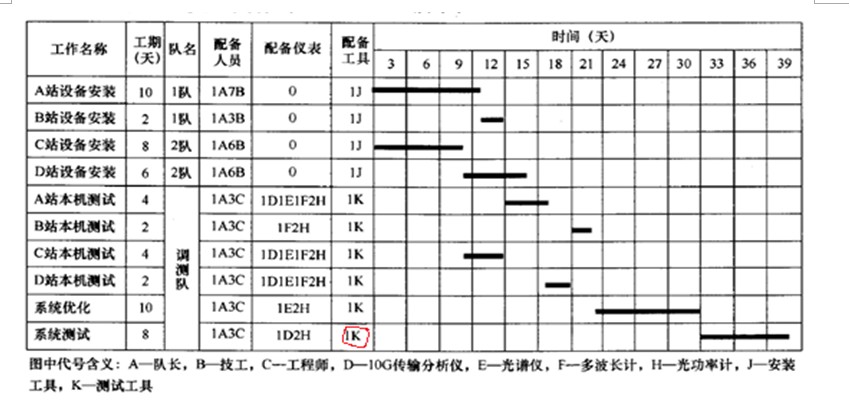

手机使用

微信扫一扫
分享
参考答案

参考解析
【不定项选择题】
某城市综合体工程,建筑面积55923 ㎡,共有3栋高层建筑(编号为A1、A2、A3),地下3层,地上29层,高度85.90 m。项目计划安装5台QTZ160塔式起重机(以下简称塔机),用于垂直运输建筑材料。在安装前,由安装单位专业技术人员甲编制了塔机安装专项施工方案。2022年4月7日,5台塔机全部安装完毕,经验收合格后投入使用。
2022年11月8日上午,安装单位专职安全生产管理人员乙和4名安装人员到达施工现场,对A1楼4号塔机第4道附墙进行安装和顶升作业。作业前,乙和项目部专职安全生产管理人员丙对4名安装人员进行了安全技术交底。
安装人员在顶升第6节标准节时,塔机顶升套架及其上部结构被顶起约0.50 m后(此时塔身与回转下支座脱离连接),顶升油缸无法继续动作。乙判断油泵电机出现故障,需要更换。乙安排4号塔机司机拆卸相邻塔机同型号的油泵进行替换。乙在塔身未与塔机回转下支座连接的情况下,操作4号塔机起重臂回转180°,将吊钩上配平用标准节放到A2楼26层楼面后,起吊更换用的油泵,起升至起重臂下约2.30 m后,回收小车准备将油泵落放至4号塔机套架上,当小车收回到距离塔身约15 m时,塔机上部结构发生翻转,平衡臂下落,起重臂上扬逆时针旋转约180°后,套架及塔机上部结构坠落地面;塔机倒塌后将临近的A2楼塔机砸倒,A2楼结构严重损坏,经济损失约2100 万元;乙在驾驶室内随塔机上部结构坠落地面,经医院抢救无效死亡。
事故发生后,项目负责人立即向相关单位进行了事故报告。
根据以上场景,回答下列问题(1~2题为单选题,3~5题为多选题):
【不定项选择题】
老李今年52岁,某公司主管,月税后收入8000元,离异,与儿子小李共同生活,小李现为某公司行政人员,月税后收入3000元,他们目前居住的两居室市价为90万元。老李目前有60万元的储蓄,他预算60岁退休后每月生活费5000元,假设老李预期寿命为85岁,不考虑他的社保,目前的储蓄包括一些基金证券,退休前整体收益率为5%,退休后全部转化为存款,年收益率为3%。
根据以上材料回答下题。
【不定项选择题】
【背景资料】
某水利工程施工招标文件依据《水利水电工程标准施工招标文件》(2009年版)和《水利工程工程量清单计价规范》(GB50501-2007)编制。合同约定:合同工期20个月,以已标价工程量清单中土方工程所含子目为单元,对柴油进行调差,调差子目完工后,若其施工期间工程所在造价信息(月刊)载明的柴油价格平均值超过中标价中柴油价格的5%时,超出5%以上部分予以调差。招标及合同管理过程中发生如下事件:
事件1:招标人A编制的招标报价表由主表和辅表组成,其中主表由投标总价、工程项目总价表,零星工作项目清单计价表等组成,编标人员建议零星工作项目清单计价表中的单价适当报高价。
事件2:在投标截止时间前投标人B提交了调价函(一正二副),将投标总价由3000万元下调至2900万元,其他不变。调价函按照招标文件要求签字、盖章、密封、装订、标识后,递交至投标文件接收地点。
事件3:合同谈判时,合同双方围绕项目经理是否应该履行下述职责进行商讨:①组织提交开工报审表;②组织编制围堰工程专项施工方案,并现场监督实施;③组织开展二级安全教育培训;④组织填写质量缺陷备案表;⑤签发工程质量保修书;⑥组织编制竣工财务决算;⑦组织提交完工付款申请单。
事件4:中标价中,土方开挖工程柴油消耗定额为0.14Kg/m3,柴油价格3元/Kg。土方开挖工程施工期4个月,合同工程量100000m3,实际开挖工程量110000m³,按施工图纸计算的工程量为108000m³,施工期间工程所在地造价信息(月刊)载明的4个月柴油价格分别为3.0元/kg、3.2元/kg、3.5元/kg.3.1元/kg。
【不定项选择题】
前些年,小张辞去了城里的工作,回家乡的镇上当了一名快递员。下面是他讲的“三农”新故事:
前些年,快递公司刚进这个镇时,全镇每天收发的包裹只有几十个。到村里送快递,碰到下雨天,三轮车陷入泥里,经常要下来推车,送完快递回来,鞋子上总会沾上半斤烂泥巴。那时挺后悔把城里的工作辞了,感觉很失落。
这几年大家的生活水平上去了,网购的人越来越多,我的业务也好了起来。特别是前年,镇上的快递公司联合农林服务中心、电商协会给大伙上起了包装技术培训课,现在咱这里的瓜果蔬菜都用上了真空包装、低温保鲜技术,快递公司也更乐意接这种订单。有了销路,家里种的就不愁卖了。
比如说吧,咱这里的枇杷很有名。以前,乡亲们摘回枇杷后,要乘两个多小时的公交车到几十公里外的城里火车站广场叫卖。那时,品质优良的枇杷也卖不上好价钱,有时连本钱都挣不回来。如今,镇里的枇杷大部分是通过电商平台销售的。每到枇杷采摘季,镇里的文化广场就会成为快递员的临时收揽点,乡亲们排着队邮寄,场面好不热闹。
现在咱镇里的电商差不多有500多户了。去年镇里投资建了个农产品电子商务产业园,把大家拧在一块闯市场,今年镇上的生意就更好了。加上上个月新开的那家快递公司,我们镇里已经有了4家快递公司。
如今大家腰包里有了钱,心气足了。我同事杨大哥这几年靠送快递,摘了帽,主动要求退出了低保。大伙对生活也讲究了起来,希望村子能漂亮些、路能好走些,闲时有地儿跳跳舞、下下棋。这不,政府投了很多钱搞建设,镇里几个大的村子,都通上了柏油路,路边装上了太阳能路灯,现在我们送快递方便多了。镇边上,搞旅游的那个村子,街两旁不仅修了排水沟、统一摆上了垃圾箱,还把老百姓的房子都整了整,青瓦白墙的,远远看,像画里似的。
最近从城里回来的人,越来越多。要么像咱一样,做做快递,或者在镇里的企业打打工;要么回家接班,种点养点啥,通过快递卖出去,不比打工挣得少,还图个自在。原来乡下的钱往城里跑,现在城里的钱开始喜欢往村子里跑。城里人来我们这投资的越来越多,要么开工厂、搞农产品加工,要么办民宿、搞乡村旅游。
和刚回来那会儿比,我现在心里踏实多了。上个月和爱人商量,打算承包村西头一块撂荒的地,再把周边几家的田一起租过来,像村里老李他们一样,也办个家庭农场。我想只要好好干,生活会越来越好的!
【不定项选择题】
【背景资料】
某城市地铁车站工程,采用明开法施工,基坑长度196m,宽度21.6m,基坑深度19.6m,支护结构为800@1000钻孔灌注桩加钢支撑,车站有4个出入口和2个风道与之相连,风道出入口均采用暗挖法施工。在车站基坑东侧与基坑平行有一条小600的铸铁供水管道,距基坑2.5m。施工中发生以下事件:
事件1.工程降水施工任务分包给专业队伍,项目经理部要求降水施工单位将地下水位降至基坑底免疫以下0.5m处即可,别的方面基本不加干预。
事件2.据现行地铁验收规范,对基坑进行了变形监测布点。由于供水管线在基坑外侧,故基坑变形控制在预定的范围内,供水管先基本上不会出现问题,因此施工单位就没有对供水管线进行布点监测。
事件3.风道的开挖断面较大,采用分部开挖法,由于穿越城市次干道,故采用长管棚的措施,管棚钢管为108mm,长度3.5m,间距500mm,外插角40°-50°。
事件4.风道防水层施工时,初衬壁有漏水处,出水量呈线流。
事件5.项目经理部采用GB/T19000标准进行施工管理,在混凝土裂缝的控制管理中,项目经理部从人.材料.机械等等要素进行裂缝全面的质量。
【不定项选择题】
【背景资料】某承包人根据《水利水电工程标准施工招标文件》( 2009版)与发包人签订某引调水工程引水渠标段施工合同,合同约定:
1)合同工期465天, 2015年10月1日开工,
2 )签约合同价为5800万元,
3 )履约保证金兼具工程质量保证金功能,施工进度付款中不再预留质量保证金;
4 )工程预付款为签约合同价的10% ,开工前分两次支付,工程预付款的扣回与还清按公式 计算; F1=20% ; F2=90%;
合同签订后发生如下事件:
事件一:项目部要求编制了该工程的施工进度计划如图所示,经监理人批准后,工程如期开工。
施工进度计划图(单位:天)
事件二:承包人完成施工控制网测量后,按监理人指示开展了抽样复测;
1 )发现因发包人提供的某基准线不准确,造成与此相关的数据均超过允许误差标准,为此监理人指示承包人对发包人提供的基准点基准线进行复测,并重新进行了施工控制网的测量,产生费用共计3万元增加工作时间5天;
2 )由于测量人员操作不当造成施工控制网数据异常,承包人进行了测量修整,修正费用0.5万元,增加工作时间2天;针对上述两种情况承包人提出了延长工期和补偿费用的索赔要求。
事件三:“土石方开挖及垫层Ⅲ”施工中遇到地址勘探未查明的软弱底层,承包人及时通知监理人。监理人会同参建各方进行现场调查后,把该事件界定为不利物质条件,要求承包人采取合理措施继续施工承包人按要求完成地基处理 ,导致 “土石方开挖及垫层Ⅲ”工作时间延长了20天,增加费用8.5万元,承包人据此提出了延长工期20天和增加费用8.5万元的要求。
事件四:截止2016年10月,承包人累计完成合同金额4820万元, 2016年11月份监理人审核批准的合同金额442万元。
【不定项选择题】
【背景资料】
某大(2)型节制闸工程共26孔,每孔净宽10m。施工采用分期导流,导流围堰为斜墙带铺盖式土石结构,断面型式示意图如图1。 工程施工过程中发生如下事件:
事件一:施工单位选用振动碾对围堰填筑土石料进行压实,其中黏土斜墙的设计干密度为1.71g/cm3,土料最优含水率击实最大干密度为1.80g/cm3。
事件二:根据水利部《水利工程生产安全重大事故隐患判定标准(试行)》(水安监[2017]344号),项目法人在组织有关单位进行生产安全事故隐患排查时发现:
(1)施工单位设置了安全生产管理机构,仅配备了兼职安全生产管理人员;
(2)闸基坑开挖未按批准的专项施工方案施工;
(3)部分新入职人员未进行安全教育和培训;
(4)降水管井反滤层损坏,抽出带泥砂的浑水。
事件三:闸上工作桥为现浇混凝土梁板结构,施工单位在梁板混凝土强度达到设计强度标准值的65%时,即拆除模板进行启闭机及闸门安装,造成某跨混凝土梁断裂,启闭机坠落,3人死亡,5人重伤。
【不定项选择题】
上官夫妇目前均刚过35岁,打算20年后即在55岁时退休,估计夫妇俩退休后第一年的生活费用为8万元(退休后每年初从退休金中取出当年的生活费用)。考虑到通货膨胀的因素,夫妇俩每年的生活费用预计会以每年4%的速度增长。夫妇俩退休后还可以生存25年,现在拟用20万元作为退休基金的启动资金,并计划开始每年年末投入一笔固定的资金用于退休基金的积累。夫妇俩在退休前采取较为积极的投资策略,假定年回报率为6%,退休后采用较为保守的投资策略,假定年回报率为4%。请回答以下问题:
【不定项选择题】
【背景资料】
某施工单位承接了一条长21km的二级公路的路基、路面工程,路基宽12m,水泥混凝土路面,为保证测量工作质量和提高测量工作效率,项目部制定了详细的测量管理制度,要求如下:
(1)测量队对有关设计文件和监理签认的控制网点测量资料,由两人共同进行核对,核对结果应作记录,并进行签认,成果经项目技术主管复核签认,总工程师审核签认后方可使用。
(2)测量外业工作必须有多余观测,并构成闭合检测条件。
(3)对各工点、工序范围内的测量工作,测量组应自检、复核并签认,分工衔接的测量工作,由测量队或测量组进行互检、复核和签认。
(4)项目经理部总工程师和技术部门负贵人要对测量队(组)执行测量复核签认制的情况进行检查,测量队对测量组执行测量复核签认制的情况进行检查,所有检查均应做好检查记录。
(5)测量记录与资料必须分类整理、妥善保管,并作为竣工文件的组成部分归档保存,具体归档资料包括:
①交接桩资料、监理工程师提供的有关测量控制网点、放样数据变更文件
②各工点,各工序测量原始记录、观测方案布置图、放样数据计算书
K6+280、K6+910为土质路堑,平均挖方深度约13m,最大挖深21.2m,路段土质为细粒土,施工单位在进行路堑开挖时,先沿路线纵向挖出一条通道,再横向进行挖掘。由于该路段地下水位较高,设置了渗沟排除地下水,但路床碾压时出现了“弹簧”现象.经检查分析,出现“弹簧”的原因是渗沟的排水效果不理想,路床下局部路段地下水排不了,导致毛细水上升,使土的含水量偏高。