

对于已完成销售手续但购买单位在月末尚未提取的产品,企业应作为代管商品处理。不作为库存商品核算。( )
【不定项选择题】


【背景资料】
某施工单位承建一跨堤桥梁工程,该桥为三跨预应力混凝土连续梁桥,跨径布置为48m+80m+48m,上部结构为预应力混凝土箱梁,箱梁顶宽14.5m,底宽7.0m,箱梁高度由6.0m渐变到2.5m。施工单位组建了项目经理部,施工过程中发生了如下事件:
事件一:项目经理部在详细踏勘现场后,编制了实施性施工组织设计,并要求由上部结构劳务分包单位编制挂篮专项施工方案,项目经理部再按规定进行报批。
事件二:项目经理部经过分析比选,决定上部结构悬臂浇筑挂篮采用菱形挂篮,挂篮如图3所示,强调挂篮与悬浇筑梁段混凝土的重量比不宜大于A,且挂篮的总重应控制在设计规定的限重之内,并为挂篮中构件B、C、D的质量作了特别要求。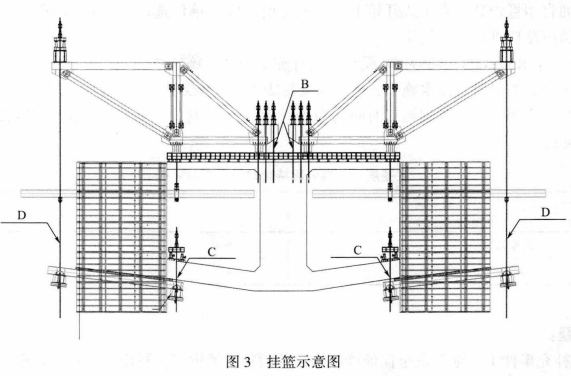
事件三:项目总工程师在挂篮施工前进行了详细的安全技术交底,强调严格按规范要求实施,混凝土的强度不低于设计强度等级值的E,弹性模量应不低于混凝土28d弹性模量的F,当采用混凝土龄期代替弹性模量控制时应不少于G天,两端张拉时,各干斤顶之间同步张拉力的允许误差宜为H。
事件四:挂篮施工进行到5号梁段,浇筑完混凝土拆除内模板时发现腹板部分位置存在厚度不均缺陷,项目经理部经过认真分析,找出了造成缺陷的可能原因,包括模板设计不合理、箱梁模板产生位移(模板没有固定牢固,使内、外模板相对水平位置发生偏差)等模板本身及施工方面的原因。

手机使用

微信扫一扫
分享
参考答案

参考解析
【不定项选择题】
【背景资料】某水库库容6.8×10⁸m3,水电站装机容量12万kw,坝高40米,在施工过程中发生如下事件。
事件一:施工企业根据工程情况设置了安全生产管理机构,指定了安全施工责任。
事件二:某日夜间,一名工人在16米处作业时,不慎直接坠地身亡。事故调查单位按按照“四不放过”原则进行处理。
事件三:施工中围堰基坑为30米长,20米宽。
【不定项选择题】
48. In this section, you are asked to write an essay based on the following chart. In your writing, you should
1) interpret the chart and
2) give your comments.
You should write at least 150 words.
Write your essay on the ANSWER SHEET. (15 points)

【不定项选择题】
根据期初资料、资料 (1) 至 (4),下列各项中,甲企业原材料减值的会计处理正确的是 ( )。
借记 “原材料” 科目 125 万元
借记 “信用减值损失” 科目 125 万元
借记 “资产减值损失” 科目 125 万元
贷记 “存货跌价准备” 科目 125 万元
【不定项选择题】
案列二
背景资料:某公司承建一城市电力隧道工程项目,该隧道工程长 600m,埋深 5m,沿线地质主要为湿陷性黄土及亚砂土,设计采用浅埋暗挖法施工。经过现场踏勘,并调查了工程现场施工条件和沿线工程地质情况后,施工单位编制了施工组织设计。隧道开挖断面示意图如下图所示:
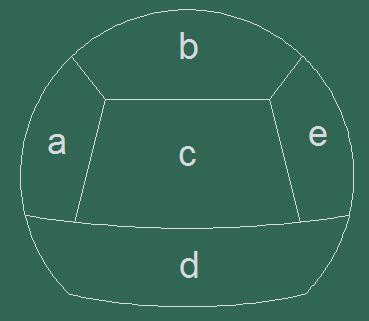
在施工过程中,发生如下事件:
事件一:喷锚暗挖加固支护的方法采用小导管注浆措施,小导管长 1.5m。注浆采用水泥浆,水泥为 42.5 级矿渣硅酸盐水泥,纵向无搭接。
事件二:施工过程中,施工单位编制了监测方案,监测项目有地表沉降、建筑物沉降、拱顶下沉等,由施工单位安排专人进行监测量测,工程结束后编制了监测报告。
【不定项选择题】
【背景资料】某施工单位承建高速铁路某隧道工程:该隧道正洞长12600m,进口平行导坑长4400m,出口平行导坑长4500m。隧道围岩岩性主要为灰岩,局部为花岗岩,全隧设计以Ⅱ级、Ⅲ级围岩为主;局部地段隧道埋深浅,围岩破碎、软弱,地下水发育,设计为V级围岩,地表有大量稻田,村庄密集。根据施工组织设计,全隧按进、出口两个工区组织施工。施工中发生以下事件:
事件1:项目经理部计划在进、出口平行导坑均采用压入式管道通风方案;正洞采用混合式管道通风方案。
事件2:正当对隧道进口正洞掌子面进行钢拱架支护作业时,监控量测组反映仰拱开挖地段的隧道拱顶下沉量测数据发生突变,建议值班领工员采取措施。该领工员经过仔细观察,发现该段隧道拱顶喷射混凝土表面已局部开裂,情况比较危险。为了避免隧道塌方,他立即安排一部分掌子面现场作业人员在隧道拱顶变形部位补打锚杆,加强初期支护。
事件3:在隧道出口正洞开挖时,掌子面围岩突然变差,围岩破碎,渗水量明显增大。施工单位立即将这一情况报告给监理单位,申请将掌子面前10m范围的隧道围岩由原设计Ⅲ级围岩变更为Ⅴ级围岩。监理工程师现场核实后随即签发变更指令。
【不定项选择题】
Shakespeare’s lifetime was coincident with a period of extraordinary activity and achievement in the drama. (46) By the date of his birth Europe was witnessing the passing of the religious drama, and the creation of new forms under the incentive of classical tragedy and comedy. These new forms were at first mainly written by scholars and performed by amateurs, but in England, as everywhere else in western Europe, the growth of a class of professional actors was threatening to make the drama popular, whether it should be new or old, classical or medieval, literary or farcical. Court, school, organizations of amateurs, and the traveling actors were all rivals in supplying a widespread desire for dramatic entertainment; and (47) no boy who went to a grammar school could be ignorant that the drama was a form of literature which gave glory to Greece and Rome and might yet bring honor to England.
When Shakespeare was twelve years old the first public playhouse was built in London. For a time literature showed no interest in this public stage. Plays aiming at literary distinction were written for schools or court, or for the choir boys of St. Paul’s and the royal chapel, who, however, gave plays in public as well as at court. (48) But the professional companies prospered in their permanent theaters, and university men with literary ambitions were quick to turn to these theaters as offering a means of livelihood. By the time that Shakespeare was twenty-five, Lyly, Peele, and Greene had made comedies that were at once popular and literary; Kyd had written a tragedy that crowded the pit; and Marlowe had brought poetry and genius to triumph on the common stage--where they had played no part since the death of Euripides. (49) A native literary drama had been created, its alliance with the public playhouses established, and at least some of its great traditions had been begun.
The development of the Elizabethan drama for the next twenty-five years is of exceptional interest to students of literary history, for in this brief period we may trace the beginning, growth, blossoming, and decay of many kinds of plays, and of many great careers. We are amazed today at the mere number of plays produced, as well as by the number of dramatists writing at the same time for this London of two hundred thousand inhabitants. (50) To realize how great was the dramatic activity, we must remember further that hosts of plays have been lost, and that probably there is no author of note whose entire work has survived.
【不定项选择题】
下列表述中,符合劳动合同法律制度规定的是 ( )。
甲物业公司无需向程某支付经济补偿金
程某可以要求甲物业公司支付拖欠工资
程某可以直接离职,无需获得甲物业公司的同意
劳动合同期限未满,程某不可以离职