
如果票据上有伪造、变造的签章,那么 ( )。
【不定项选择题】


甲公司为增值税一般纳税人,销售商品适用的增值税税率为13%,装修服务适用的增值 税税率为9%,委托代销服务适用的增值税税率为6%。2022年1月份,甲公司发生的有 关经济业务如下:
(1)1月1日,甲公司与A公司签订一项为期3个月的装修合同,合同约定装修价款为 100万元,增值税税额为9万元。2022年1月31日,经专业测量师测量后确定,该 项劳务的完工程度为25%;截至2022年1月31 H ,甲公司为完成该合同累计发生 劳务成本20万元(假定均为装修人员薪酬),估计还将发生劳务成本60万元。假 定该项劳务属于在一段时间内履行的履约义务,甲公司按照专业测量师实际测量的 完工程度确定履约进度。A公司按履约进度支付价款及相关的增值税税款。
(2)1月3日,向乙公司销售M商品4000件,不含税单价为500元,单位成本为300元, 符合收入确认条件。由于批量销售,承诺给予乙公司10%的商业折扣,合同规定的现 金折扣条件为2/20、N/30 (计算现金折扣时不考虑增值税),预计客户20天内付款 的概率为90%, 20天后付款的概率为10%。甲公司认为按照最可能发生的金额能够更 好地预测其有权获取的对价金额。10 0,收到乙公司支付的购货款项。
(3)1月9日,与丙公司签订委托代销协议,委托丙公司代销商品一批,共计150件,合 同约定丙公司应按每件20万元(不含增值税)对外销售,按售价的10%收取手续费, 每件商品实际成本为17万元,当日发出商品。15 日 ,甲公司收到丙公司开具的100 件已销商品的代销清单,据此向丙公司开具了增值税专用发票,注明的价款为2000 万元,增值税税额为260万元;同时收到丙公司提供代销服务开具的增值税专用发 票,注明的价款为200万元,增值税税额为12万元;委托代销款项尚未收到。
(4)1月16 日 ,向丁公司销售一批商品,该批商品售价为300万元,成本为250万元。 甲公司销售商品时,得知丁公司资金周转困难,但鉴于丁公司以往信用记录良好, 甲公司仍然发出商品。该业务不符合收入确认条件。
要求:
根据上述资料,不考虑其他因素,分析回答下列小题。(答案中的金额单位用万元表示)
3. 根据资料(3),下列各项中,甲公司委托代销商品相关的会计处理正确的是( )。
A.
发出商品时:借:发出商品 2550贷:库存商品 2550
B.
确认委托代销收入时:借:应收账款 2260贷:主营业务收入 2000应交税费——应交增值税(销项税额) 260
C.
结转销售成本时:借:主营业务成本 1700贷:发出商品 1700
D.
确认代销手续费时:借:销售费用 200应交税费——应交增值税(进项税额) 12贷:应收账款212

手机使用

微信扫一扫
分享
参考答案

参考解析
【不定项选择题】
计算甲公司以旧换新方式零售金项链应缴纳消费税的下列算式中,正确的是( )。
180800×5%=9040 (元)
72320×5%=3616 (元)
180800÷(1+13%)×5%=8000 (元)
72320÷(1+13%)×5%=3200 (元)
【不定项选择题】
【背景资料】某煤矿新建一副立井井筒,设计净直径8.6m,深度900m。该井筒地质资料表明,冲积层及风化带由砂质粘土、砂层和卵石层组成,含水率低且流动性小,水压不大于0.19MPa,稳定性较差;基岩段以泥岩、砂岩及泥质砂岩为主,为弱稳定到中等稳定岩层。表土段88米,每循环进尺1m,井壁采用钢筋混凝土;基岩段井壁采用普通混凝土,混凝土强度等级C35。
某施工单位承建该井筒施工项目,根据地质资料、初步设计、机械化配套方案等编制了井筒施工组织设计。施工组织设计中,表土层及基岩段均采用冻结法施工,基岩段采用钻眼爆破法,模板选用高度3.6m的金属整体模板,混凝土采用输料管下放。
施工过程中,发生了下列事件:
事件1:表土段施工结束,监理工程师组织了工程验收。施工单位提供的全部验收资料中,表土层掘进分项工序验收记录表共73份,抽查10份。其中,主控项目井筒掘进半径部分验收记录表上测点数为5~7个。验收时,监理工程师现场选择3个检查点检测井筒净半径,检查点的位置距井口20m、55m、80m。
事件2:该井筒在基岩段共穿过两个含水层,厚度分别为15m和30m,相隔30m,两个含水层最大涌水量均为40m3/h。施工单位在没有采取有效措施的情况下进行了混凝土浇筑。脱模后发现井壁质量蜂窝麻面严重,井筒一侧半径偏差达到-20mm。
事件3:为保证施工安全和井筒施工质量,施工单位对井筒基岩段较厚的含水层与断层破碎带选择了工作面预注浆治水方案,保证了井筒的顺利施工。
【不定项选择题】
某安装公司中标一科研办公楼(寒冷地区)机电专业分包工程项目,承包范围包括建筑给排水及供暖系统、通风空调系统和电气系统;建筑智能化系统由建设单位发包给某智能化公司。工程合同中明确要求机电专业分包商须配合建设单位获得绿色建筑二星级评价的认证。
项目开工后,各专业设计师进行了图纸交底建设单位组织进行了图纸会审,安装公司据此展开图纸深化设计,包括各类机电管道吊装安装详图的设计及计算并通过了设计的审核批准,下图1是部分机电管道吊装安装节点详图。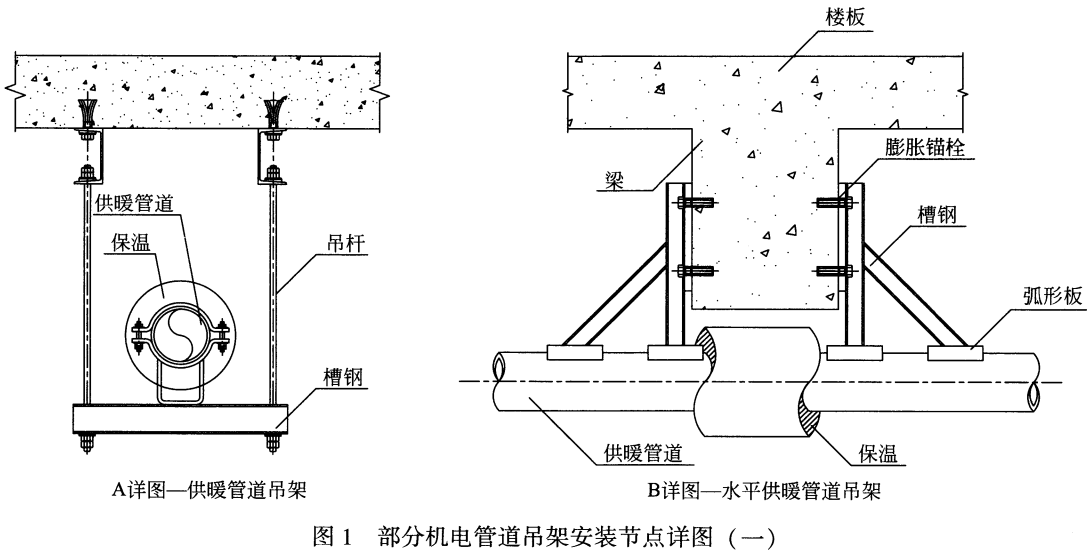

【不定项选择题】
How does your reading proceed? Clearly you try to comprehend, in the sense of identifying meanings for individual words and working out relationships between them, drawing on your implicit knowledge of English grammar. (41) _______ You begin to infer a context for the text, for instance, by making decisions about what kind of speech event is involved: Who is making the utterance, to whom, when and where.
The ways of reading indicated here are without doubt kinds of comprehension. But they show comprehension to consist not just of passive assimilation but of active engagement in inference and problem-solving. You infer information you feel the writer has invited you to grasp by presenting you with specific evidence and clues. (42) _______
Conceived in this way, comprehension will not follow exactly the same track for each reader. What is in question is not the retrieval of an absolute, fixed or “true” meaning that can be read off and checked for accuracy, or some timeless relation of the text to the world. (43) _______
Such background material inevitably reflects who we are. (44) _______ This doesn’t, however, make interpretation merely relative or even pointless. Precisely because readers from different historical periods, places and social experiences produce different but overlapping readings of the same words on the page--including for texts that engage with fundamental human concerns--debates about texts can play an important role in social discussion of beliefs and values.
How we read a given text also depends to some extent on our particular interest in reading it. (45) _______ Such dimensions of reading suggest--as others introduced later in the book will also do--that we bring an implicit (often unacknowledged) agenda to any act of reading. It doesn’t then necessarily follow that one kind of reading is fuller, more advanced or more worthwhile than another. Ideally, difficult kinds of reading inform each other, and act as useful reference points for and counterbalances to one another. Together, they make up the reading component of your overall literacy, or relationship to your surrounding textual environment.
[A] Are we studying that text and trying to respond in a way that fulfils the requirement of a given course? Reading it simply for pleasure? Skimming it for information? Ways of reading on a train or in bed are likely to differ considerably from reading in a seminar room.
[B] Factors such as the place and period in which we are reading, our gender, ethnicity, age and social class will encourage us towards certain interpretations but at the same time obscure or even close off others.
[C] If you are unfamiliar with words or idioms, you guess at their meaning, using clues presented in the context. On the assumption that they will become relevant later, you make a mental note of discourse entities as well as possible links between them.
[D] In effect, you try to reconstruct the likely meanings or effects that any given sentence, image or reference might have had: These might be the ones the author intended.
[E] You make further inferences, for instance, about how the text may be significant to you, or about its validity--inferences that form the basis of a personal response for which the author will inevitably be far less responsible.
[F] In plays, novels and narrative poems, characters speak as constructs created by the author, not necessarily as mouthpieces for the author’s own thoughts.
[G] Rather, we ascribe meanings to texts on the basis of interaction between what we might call textual and contextual material: between kinds of organization or patterning we perceive in a text’s formal structures (so especially its language structures) and various kinds of background, social knowledge, belief and attitude that we bring to the text.
【不定项选择题】
根据资料 (1), 下列各项中,与办公楼折旧相关的表述正确的是 ( )。
该办公楼的年折旧率为 5%
该办公楼的预计净残值为 96 万元
该办公楼的预计净残值为 120 万元
该办公楼的年折旧率为 4.8%
【不定项选择题】
Write an essay of 160-200 words based on the pictures below. In your essay, you should
1) Describe the picture briefly,
2) Interpret the implied meaning, and
3) Give your comments.
Write your answer on the ANSWER SHEET. (20 points)