



某机电工程公司投标总承包了一工业项目,主要内容包括:设备基础施工、厂房钢结构制作和吊装、设备安装调试、工业埋地不锈钢管道安装及试运行等。
项目开工前,该机电工程公司按合同规定向建设单位提交了施工进度计划,编制了各项工作逻辑关系及工作时间表(见下表)。该项目的厂房钢结构选用了低合金结构钢,加热矫正后进行了冷却。工业埋地不锈钢管道安装完成后,进行了管道系统液压试验,介质为清水,水中氯离子含量35ppm,试验环境温度为10℃。管道水冲洗合格后,由施工单位会同建设单位或监理单位共同检查确认,并填写了相关纪录。工程施工中,由于工艺设备是首次安装,经反复多次调整后才达到质量要求。致使项目部工程费用超支,工期拖后。在150天时,项目部用赢得值法分析,取得以下3个数据:已完工程预算费用3500万元,计划工程预算费用4000万元,已完成实际费用4500万元。
在设备安装,试验和调试完成后由相关单位组织了该项目的单体、联动和负荷试运行工作。
各项工作逻辑关系及工作时间表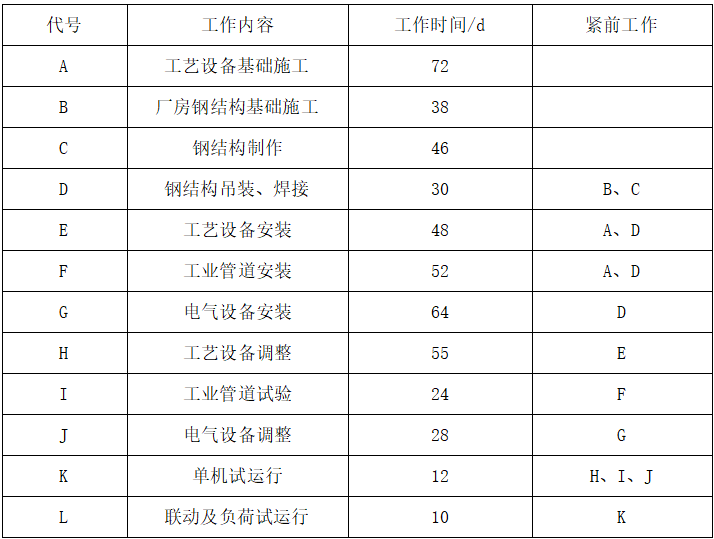
参考答案



参考解析
【不定项选择题】
【不定项选择题】
【背景资料】
某预应力T型梁桥,大桥主体工程施工完成后,施工单位即进行台背回填。该桥台高9m,桥台地基为微风化砂岩。为了施工管理和质量检验评定的需要,施工单位将台背回填作为分部工程,下设挖台阶与填土两个分项工程进行质量评定。台背回填前,进行了挖台阶施工,自检后请监理工程师检查验收,但驻地监理工程师临时外出开会,考虑到地基为砂岩,强度满足要求,施工单位及时进行了台背填筑,等监理工程师回来后补办手续。台背填筑时,采用与桥头引道一致的粘土作为台背填料,并对进场的填料进行检验,在桥台上绘出每层填筑的填厚线位,采用水平分层填筑方法填筑,分层松铺厚度30cm,用夯压机械进行夯实,每层夯实完工后进行自检并照相,并对每个桥台单独建立了技术档案。
【不定项选择题】
【背景资料】某公司承建一座城市桥梁,该桥上部结构为6×20m简支预制预应力混凝土空心板梁,每跨设置边梁2片,中梁24片;下部结构为盖梁及Φ1000mm圆柱式墩,重力式U型桥台,基础均采用Φ1200mm钢筋混凝土钻孔灌注桩。桥墩构造如图1所示。
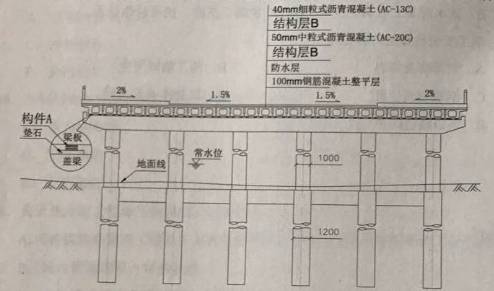
图1桥墩构造示意图(单位:mm)
开工前,项目部对该桥划分了相应的分部.分项工程和检验批,作为施工质量检查.验收的基础。划分后的分部(子分部).分项工程及检验批对照表如表1.表1桥梁分部(子分部).分项工程及检验批对照表(节选)

工程完工后,项目部立即向当地工程质量监督机构申请工程竣工验收,该申请未被受理,此后,项目部按照工程竣工验收规定对工程进行全面检查和整修,确认工程符合竣工验收条件后,重新申请工程竣工验收。
【不定项选择题】
根据资料 (3), 下列各项中,该企业经营出租设备计提折旧的会计处理正确的是 ( )。
借:主营业务成本 0.6 贷:累计折旧 0.6
借:管理费用 0.6 贷:累计折旧 0.6
借:其他业务成本 0.6 贷:累计折旧 0.6
借:生产成本 0.6 贷:累计折旧 0.6
【不定项选择题】
【背景资料】 A 公司承接一项 DN1000mm 天然气管线工程,管线全长 4.5km,设计压力 4.0MPa,材质 L485,除穿越一条宽度为 50m 的非通航河道采用泥水平衡法顶管施工外,其余均采用开凿明挖施工,B 公司负责该工程的监理工作。工程开工前,A 公司查勘了施工现场,调查了地下设施,管线和周边环境,了解水文地质情况后,建议将顶管法施工改为水平定向钻施工,经建设单位同意后办理了变更手续,A 公司编制了水平定向钻施工专项方案。建设单位组织了包含 B 公司总工程师在内的 5 名专家对专项方案进行了论证,项目部结合论证意见进行了修改,并办理了审批手续。 为顺利完成穿越施工,参建单位除研究设定钻进轨迹外,还采用专业浆液现场配制泥浆液,以便在定向钻穿越过程中起到如下作用:软化硬质土层、调整钻进方向、制泥浆液、为泥浆马达提供保护。 项目部按所编制的穿越施工专项方案组织施工,施工完成后在投入使用前进行了管道功能性试验。
【不定项选择题】
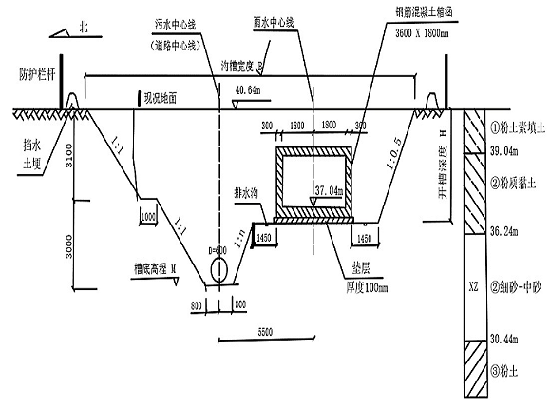
【背景资料】某公司承建某城市道路综合市政改造工程,总长 2.17km,道路横断面为三幅路形式,主路机动车道为 改性沥青混凝土面层,宽度 18m,同期敷设雨水、污水等管线。污水干线采用 HDPE 双臂波纹管,管道直径 D=600mm~1000mm,雨水干线为 3600mm×1800mm 钢筋混凝土箱涵,底板、围墙结构厚度均为 300mm。
管线设计为明开槽施工,自然放坡,雨、污水管线采用合槽方法施工,如图 4 所示,无地下水,由于 开工日期滞后,工程进入雨季实施。 沟槽开挖完成后,污水沟槽南侧边坡出现局部坍塌,为保证边坡稳定,减少对箱涵结构施工影响,项目部对南侧边坡采取措施处理。
【问题】
【不定项选择题】
案例一
背景资料:建设单位发包一年产量300万吨的煤矿项目。采用公开招标方式进行施工招标。A、B、C、D、E、F、G7家施工单位通过了资格预审并参与项目投标。投标文件编制过程中,施工单位A根据设计图纸复核工程量清单时发现,分部分项工程量清单中某清单项目的特征描述与设计图纸不符。
经过招标投标,施工单位A中标并与建设单位签订了施工合同,工程内容包括矿办公楼、宿舍楼、矿井井底车场和主要硐室等,合同总价1亿元。施工期间,发生以下事件:
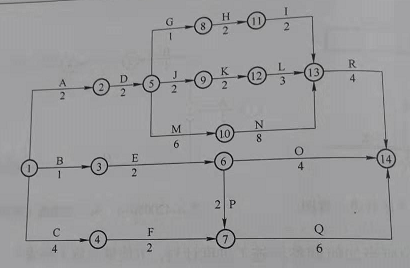
事件1:开工前,施工单位根据合同工期编制了施工进度计划网络图(如下图所示),并报监理工程师审核。监理工程师发现,按照设计文件,工作B完成后。工作F方可施工,这在进度计划网络图中没有体现。
事件2:工程开工后不久,由于劳动力准备工作不充分,导致部分施工队伍人员不足,而另外的施工队伍出现窝工。
事件3:实际施工过程中,F工作由于工作面出现瓦斯突出,进行处理耽误了1个月的时间,额外支出30万元;D工作在通过断层破碎带时,由于施工单位自备的排水水泵故障造成巷道被淹,耽误了3个月的时间,额外支出360万元。
【不定项选择题】
Read the following text and match each of the numbered items in the left column to its corresponding information in the right column. There are two extra choices in the right column. Mark your answers on the ANSWER SHEET. (10 points)
The decline in American manufacturing is a common refrain, particularly from Donald Trump. “We don’t make anything anymore,” he told Fox News, while defending his own made-in-Mexico clothing line.
Without question, manufacturing has taken a significant hit during recent decades, and further trade deals raise questions about whether new shocks could hit manufacturing.
But there is also a different way to look at the data.
Across the country, factory owners are now grappling with a new challenge: Instead of having too many workers, they may end up with too few. Despite trade competition and outsourcing, American manufacturing still needs to replace tens of thousands of retiring boomers every year. Millennials may not be that interested in taking their place. Other industries are recruiting them with similar or better pay.
For factory owners, it all adds up to stiff competition for workers – and upward pressure on wages. “They’re harder to find and they have job offers,” says Jay Dunwell, president of Wolverine Coil Spring, a family-owned firm. “They may be coming [into the workforce], but they’ve been plucked by other industries that are also doing as well as manufacturing,” Mr. Dunwell has begun bringing high school juniors to the factory so they can get exposed to its culture.
At RoMan Manufacturing, a maker of electrical transformers and welding equipment that his father cofounded in 1980, Robert Roth keeps a close eye on the age of his nearly 200 workers. Five are retiring this year. Mr. Roth has three community-college students enrolled in a work- placement program, with a starting wage of $13 an hour that rises to $17 after two years.
At a worktable inside the transformer plant, young Jason Stenquist looks flustered by the copper coils he’s trying to assemble and the arrival of two visitors. It’s his first week on the job. Asked about his choice of career, he says at high school he considered medical school before switching to electrical engineering. “I love working with tools. I love creating,” he says.
But to win over these young workers, manufacturers have to clear another major hurdle: parents, who lived through the worst US economic downturn since the Great Depression, telling them to avoid the factory. Millennials “remember their father and mother both were laid off. They blame it on the manufacturing recession,” says Birgit Klohs, chief executive of The Right Place, a business development agency for western Michigan.
These concerns aren’t misplaced: Employment in manufacturing has fallen from 17 million in 1970 to 12 million in 20When the recovery began, worker shortages first appeared in the high-skilled trades. Now shortages are appearing at the mid-skill levels.
“The gap is between the jobs that take no skills and those that require a lot of skill,” says Rob Spohr, a business professor at Montcalm Community College. “There’re enough people to fill the jobs at McDonalds and other places where you don’t need to have much skill. It’s that gap in between, and that’s where the problem is.”
Julie Parks of Grand Rapids Community College points to another key to luring Millennials into manufacturing: a work/life balance. While their parents were content to work long hours, young people value flexibility. “Overtime is not attractive to this generation. They really want to live their lives,” she says.
| says that he switched to electrical engineering because he loves working with tools. |
Jay Dunwell | points out that there are enough people to fill the jobs that don’t need much skill. |
Jason Stenquist |
points out that the US doesn’t manufacture anything anymore. |
Birgit Klohs |
believes that it is important to keep a close eye on the age of his workers. |
Rob Spohr | [E] says that for factory owners, workers are harder to find because of stiff competition. |
Julie Parks | [F] points out that a work / life balance can attract young people into manufacturing. |
| [G] says that the manufacturing recession is to blame for the lay-off of the young people’s parents. |
【不定项选择题】
关于破产重整、和解、清算 3 个程序的关系,依据我国法律规定,下列说法错误的是( )
债权人申请破产清算后,出资额占债务人注册资本 1/10 以上的出资人,可申请和解
在破产宣告后,债务人还可申请和解,因为和解是破产的必经程序
破产重整可以经由债权人申请转换为和解程序
在法院受理债权人的破产申请后,宣告破产前,出资额占债务人注册资本 1/10 以上的出资人,可申请重整