
《幼儿园工作规程》规定,幼儿入园除进行健康检查外,禁止任何形式的考试和测查。( )
【不定项选择题】


根据资料 (4),下列各项中,关于甲公司长期股权投资业务对报表项目的影响表述正确的是 ( )。
A.
“投资收益” 项目增加 200 万元
B.
“资本公积” 项目增加 200 万元
C.
“其他综合收益” 项目增加 200 万元
D.
“长期股权投资” 项目增加 200 万元

手机使用

微信扫一扫
分享
参考答案

参考解析
【不定项选择题】
[A] Some archaeological sites have always been easily observable—for example, the Parthenon in Athens, Greece; the pyramids of Giza in Egypt; and the megaliths of Stonehenge in southern England. But these sites are exceptions to the norm. Most archaeological sites have been located by means of careful searching, while many others have been discovered by accident. Olduvai Gorge, an early hominid site in Tanzania, was found by a butterfly hunter who literally fell into its deep valley in 1911. Thousands of Aztec artifacts came to light during the digging of the Mexico City subway in the 1970s.
[B] In another case, American archaeologists René Million and George Cowgill spent years systematically mapping the entire city of Teotihuacán in the Valley of Mexico near what is now Mexico City. At its peak around AD 600, this city was one of the largest human settlements in the world. The researchers mapped not only the city’s vast and ornate ceremonial areas, but also hundreds of simpler apartment complexes where common people lived.
[C] How do archaeologists know where to find what they are looking for when there is nothing visible on the surface of the ground? Typically, they survey and sample (make test excavations on) large areas of terrain to determine where excavation will yield useful information. Surveys and test samples have also become important for understanding the larger landscapes that contain archaeological sites.
[D] Surveys can cover a single large settlement or entire landscapes. In one case, many researchers working around the ancient Maya city of Copán, Honduras, have located hundreds of small rural villages and individual dwellings by using aerial photographs and by making surveys on foot. The resulting settlement maps show how the distribution and density of the rural population around the city changed dramatically between AD 500 and 850, when Copán collapsed.
[E] To find their sites, archaeologists today rely heavily on systematic survey methods and a variety of high-technology tools and techniques. Airborne technologies, such as different types of radar and photographic equipment carried by airplanes or spacecraft, allow archaeologists to learn about what lies beneath the ground without digging. Aerial surveys locate general areas of interest or larger buried features, such as ancient buildings or fields.
[F] Most archaeological sites, however, are discovered by archaeologists who have set out to look for them. Such searches can take years. British archaeologist Howard Carter knew that the tomb of the Egyptian pharaoh Tutankhamun existed from information found in other sites. Carter sifted through rubble in the Valley of the Kings for seven years before he located the tomb in 1922. In the late 1800s British archaeologist Sir Arthur Evans combed antique dealers’ stores in Athens, Greece. He was searching for tiny engraved seals attributed to the ancient Mycenaean culture that dominated Greece from the 1400s to 1200s BC. Evans’s interpretations of these engravings eventually led him to find the Minoan palace at Knossos (Knosós), on the island of Crete, in 1900.
[G] Ground surveys allow archaeologists to pinpoint the places where digs will be successful. Most ground surveys involve a lot of walking, looking for surface clues such as small fragments of pottery. They often include a certain amount of digging to test for buried materials at selected points across a landscape. Archaeologists also may locate buried remains by using such technologies as ground radar, magnetic-field recording, and metal detectors. Archaeologists commonly use computers to map sites and the landscapes around sites. Two- and three-dimensional maps are helpful tools in planning excavations, illustrating how sites look, and presenting the results of archaeological research.
41. |
| → | A | → | 42. |
| → | E | → | 43. |
| → | 44. |
| → | 45. |
|
【不定项选择题】
【背景资料】某大型海上工程孤立墩混凝土承台施工,其混凝土的配合比(胶凝材料∶砂∶碎石)为1∶1.50∶2.50,水胶比为0.40,胶凝材料总用量为444kg/m3。混凝土的初凝时间为1.5h,终凝时间为5.0h,承台的平面尺寸为10m×10m,承台底标高为+1.0m(理论深度基准面,下同),顶标高为+5.0m。9根直径1.2m的大管桩伸入承台混凝土中2m。
承台施工时桩芯混凝土已提前灌注完成。
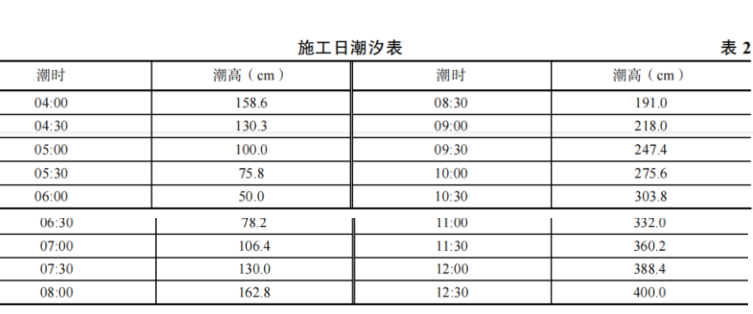
施工水域潮汐为规则半日潮,施工日的潮汐表见表2。因承台尺寸较大,施工用非水密模板。采用有效生产能力为50m3/h的混凝土拌合船,承台混凝土分两次浇筑。第一次浇筑厚度为1.0m,分四层浇筑,自下而上分别为300mm、300mm、200mm、200mm。海上浇筑混凝土要在水位以上进行振捣,在初凝前底层混凝土不宜被水淹没。
【不定项选择题】
某市政建设公司承建某燃气管道工程,管径200mm,壁厚4mm。垂直穿越现有道路,管线埋深-2.5m。穿路段采用密闭式顶管施工,顶进的套管为直径0.6m的钢筋混凝土管,混凝土强度C40。套管穿越土层主要为粉质黏土和砂质土,地下水位稳定在地下-1.0m。
事件一:施工过程中,施工单位根据有关规定到相关部门去办理了相关手续并获得了审批。
事件二:接收井为矩形平面,三边采取竖向围护墙支护,一面采取放坡开挖。围护墙采用直径800mm的灌注桩,间距1600mm布置,墙外侧用水泥土搅拌桩加固2道,墙内侧挂网喷射混凝土支护。套管顶进完毕,铺设厚度100mm的贫混凝土垫层,砌筑检查井。为了确保干地施工,需要降水。降水井位置在A轴、B轴、C轴三个位置进行比选。断面图如图所示。
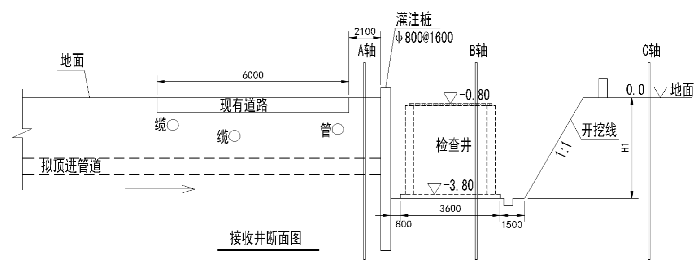
事件三:施工方案中,顶管顶进过程中,在套管周边采取了注浆辅助的施工工艺。始发井的临时施工平面布置图如图所示。施工方案上报后,监理工程师审查时提出两点要求:
1、改正施工平面布置图中错误之处
2、补充缺少必要的临时设施。
3、采取措施防止周边道路、地面等产生过大的沉降。

【不定项选择题】
(二)甲公司为增值税一般纳税人,2018年至2022年发生的有关资产业务资料如下:
(1)2018年1月1日,甲公司将一幢办公楼的建造工程出包给乙公司承建,按合理估计 的发包工程进度和合同规定向乙公司结算进度款并取得乙公司开具的增值税专用发 票,发票注明工程款800万元,增值税税额72万元。2018年12月31日,工程完 工后,收到乙公司有关工程结算单据,补付工程款并取得乙公司开具的增值税专用 发票,注明工程款400万元,增值税税额36万元,工程达到预定可使用状态并交 付企业总部使用;该办公楼预计使用年限50年,采用双倍余额递减法计提折旧, 不考虑净残值。
(2)2021年1月1日,甲公司与丙公司签订了经营租赁合同,约定自合同签订日起将该 栋办公楼出租给丙公司,为期3年,年租金为60万元,合同约定租金于每月末收 取。该办公楼所在区域有活跃的房地产交易市场,而且能够从房地产交易市场上取 得同类房地产的市场报价,甲公司决定采用公允价值模式对该项出租的房地产进行 后续计量。合同签订日该办公楼的公允价值为1300万元。
(3)2021年12月31 0 ,该办公楼公允价值为1260万元,2022年12月31日,该办公 楼公允价值为1380万元。
要求:
根据上述资料,不考虑其他因素,分析回答下列小题。(答案中的金额单位用万元表示)
1. 根据资料(1),甲公司将办公楼建造工程出包给乙公司承建的会计处理正确的是( )。
按发包进度结算工程款:借:在建工程 872贷:银行存款 872
按发包进度结算工程款:借:在建工程 800应交税费——应交增值税(进项税额) 72贷:银行存款 872
工程完工补付工程款:借:在建工程 436贷:银行存款 436
工程达到预定可使用状态:借:固定资产 1200贷:在建工程 1200
【不定项选择题】
背景资料:
A公司中标承建一项热力站安装工程,该热力站位于某公共建筑物的地下一层。一次给回水设计温度为125℃/65℃,二次给回水设计温度为80℃/60℃,设计压力为1.6MPa;热力站主要设施包括板式换热器、过滤器,循环水泵、补水泵,水处理器,控制器、温控阀等;采取整体隔声降噪综合处理。热力站系统工作原理如下图所示。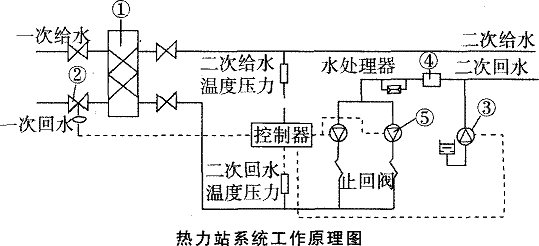
工程实施过程中发生如下事件:
事件一:安装工程开始前,A公司与公共建筑物的土建施工单位在监理单位的主持下对预埋吊点、设备基础、预留套管(孔洞)进行了复验,划定了纵向、横向安装基准线和标高基准点,并办理了书面交接手续。设备基础复验项目包括纵轴线和横轴线的坐标位置、基础面上的预埋钢板和基础平面的水平度、基础垂直度、外形尺寸、预留地脚螺栓孔中心线位置。
事件二:鉴于工程的专业性较强,A公司决定将工程交由具有独立法人资格和相应资质,且具有多年施工经验的下属B公司来完成。
事件三:为方便施工,B公司进场后拟利用建筑结构作为起吊、搬运设备的临时承力构件,并征得了建设、监理单位的同意。
事件四:工程施工过程中,质量监督部门对热力站工程进行监督检查,发现施工资料中施工单位一栏均填写B公司,且A公司未在施工现场设立项目管理机构。根据《中华人民共和国建筑法》,A公司与B公司涉嫌违反相关规定。
【不定项选择题】
【背景资料】
某施工单位承接了一座特大型桥梁工程,为了更好地开展施工技术管理工作,项目部在施工准备阶段进行了如下技术管理工作:
事件1:技术策划由项目经理负责组织,项目技术管理部门和参建单位有关技术人员参加。技术策划应在充分理解合同文件与设计文件、施工调查和项目部自身资源及技术条件的基础上进行,并充分体现项目管理层预期。
事件2:工程开工前,在业主(或监理)主持下,由设计单位向施工单位在项目部会议室进行书面交桩,设计单位将路线勘测时所设置的导线控制点、水准控制点及其他重要点位的桩位及相关技术资料逐一交给施工单位,并经双方签字确认,交桩工作即完成。
项目部接受导线控制点、水准控制点的桩位后,由于工期紧,施工单位随即将资料用于现场测量放样。