

【背景资料】
某民用机场,跑道磁方位角为28°,基准飞行长度为3200m,跑道道面宽45m,飞行区指标II为E。该机场常年主导风向为西南风,由于资金问题只能建设单向仪表着陆系统。
【不定项选择题】


企业试算平衡表中全部账户本期借方发生额合计等于全部账户本期贷方发生额合计,表明该企业本期记账正确。( )
A.
错
B.
对

手机使用

微信扫一扫
分享
参考答案

参考解析
【不定项选择题】
【不定项选择题】
【背景资料】甲公司中标跨河桥梁工程,工程规划桥梁建成后河道保持通航,要求桥下净空高度不低 于10m。桥梁下部结构采用桩接柱的形式,下图为桥梁下部结构横断面示意图。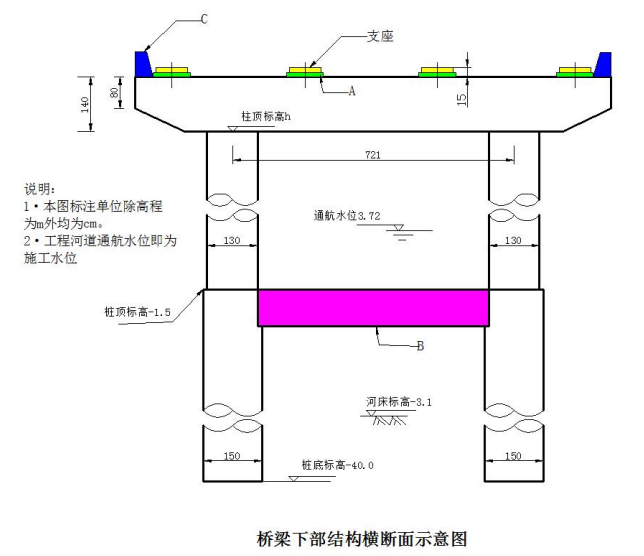
工程施工方案有如下要求:
(1)因桥梁的特殊情况,方案决定桥梁下部结构采取先筑岛后围堰形式,即桩基施工时 采用河道筑岛,待桩基础完成后再开挖进行下部结构后续施工。
(2)桥梁桩基采用钻孔灌注桩,为保证施工进度,成孔速度控制在2.5m/h。在检查孔径 中,发现有缩径现象,遂采取了相应的措施处理。
(3)根据本工程实际情况,上部结构T型梁自重35t,项目部采用穿巷架桥机方式进行桥 梁的架设工作。项目部进场后配备了专职安全员,并编制了专项安全应急预案,应急预案的主要内容有事故类型和危害程度分析、应急处置基本原则、预防及预警、应急处置等。
【不定项选择题】
(一)保险规划
张先生夫妇两人今年都已经40岁,他们有一个女儿10岁,张先生的父母与其同住。请理财规划师为其调整家庭的风险管理和保险规划。
根据以上材料回答(1)~(4)题。
【不定项选择题】
甲公司为增值税一般纳税人,2019 年发生交易性金融资产
相关经济业务如下:
(1)4 月 15 日,从上海证券交易所购入乙公司股票 100 万股,支付价款 2500 万元,其中包含已宣告但尚未发放的现金股利 50 万元,另支付相关交易费用 0.5 万元,取得增值税专用发票上注明的增值税税额为 0.03万元,甲公司将该股票投资确认为交易性金融资产,4 月 25 日,收到乙公司发放的现金股利并存入投资款专户。
(2)6 月 30 日,持有上述乙公司股票的公允价值为 2550 万元。
(3)7 月 31 日,将持有的乙公司股票全部转让,取得价款 2700 万元,存入投资款专户,确认转让该金融商品应交增值税为 11.32 万元。
要求:根据上述资料,不考虑其他因素,分析回答下列小题。(答案中的金额单位用万元表示)
3.根据资料(1)和(2),下列各项中,甲公司 6 月 30 日相关会计处理表述正确的是( )。
贷记“投资收益”科目 50 万元
借记“交易性金融资产——成本”科目 50 万元
借记“交易性金融资产——公允价值变动”科目 100 万元
贷记“公允价值变动损益”科目 100 万元
【不定项选择题】
【案例三】
某泵站工程设计流量为100m3/s,净扬程为2.5m,总装机5000kW,泵站自进水至出水设引水明渠、前池、拦污检修闸、泵房、副厂房、出水涵、出口防洪闸及出水明渠等建筑物,为正向进水、正向出水,进、出水纵向轴线全长布置约256m。工程于2014年10月20日开工,于2016年4月20日全部完成。施工过程中发生如下事件:
事件1:主体工程开工后,监理机构组织设计、施工单位等进行了工程项目划分,确定了主:要单位工程、主要分部工程、重要隐蔽单元工程和关键部位单元工程,并将项目划分表及说明书面报相应工程质量监督机构确认。
事件2:所有单元工程质量在施工单位自评合格后,报监理单位复核,由监理工程师核定质量等级并签证认可。
事件3:2016年5月10日,泵站工程建设项目全部完成,项目法人主持进行了泵站单位工程验收,该单位工程质量由施工单位自评,监理单位复核,项目法人认定,结果为:5个分部工程质量全部合格,有4个分部工裎达到优良等级,外观质量得分率达到为89.5%,工程未发生质量事故,该单位工程达到优良标准。
事件4:项目法人根据竣工验收的需要,委托工程监理单位对工程质量进行抽样检测。2016年5月20日,应项目法人申请,竣工验收主持单位组织进行了竣工验收。
【不定项选择题】
五、【背景资料】某立井井筒工程施工采用公开招标,井筒设计净直径8m,深度920m,其中表土段600m,冻结法施工,工程估算价1.5亿元人民币。招标文件规定,本工程投标保证金为60万元。A、B、C、D、E五家施工单位通过了资格预审,并购买了招标文件。五家施工单位均按要求在规定时间提交了投标文件。工程开标后,施工单位A因对工程风险因素估计不足,决定放弃投标。于是,主动向评标委员会提出书面澄清文件,要求撤销投标文件,并申请退还投标保证金。经过综合评标,施工单位B中标,随后与建设单位签订了施工承包合同。为加强施工成本控制,施工单位项目部成立了施工成本管理小组,对该工程施工成本进行认真估算,编制了成本计划并制定了成本控制措施。成本管理小组对工程存在的各种风险因素进行了分析识别,列出了风险清单,并根据风险特征确定了风险应对措施,其中针对工伤事故风险,采取了3项防范措施:(1)强化安全和规程教育;(2)增加临时支护措施投入;(3)为作业人员购买安全保险。施工过程中,由于设计变更,井筒深度增加了50m。建设单位决定按施工单位投标书中井筒单价,增加50m的费用对该设计变更进行补偿。工程施工中,当地突发5.0级地震,造成现场道路和施工用房经济损失32万元,施工单位的一台价值36万元施工设备损坏报废,建设单位采购的工程材料损毁损失23万元,现场清理及恢复施工条件花费16万元,施工人员窝工及设备闲置费用18万元。
【不定项选择题】
根据资料(3),下列各项中,关于甲公司接受专利技术投资会计处理表述正确的是( )。
丁公司对甲公司的实际投资额应为265万元
贷记“资本公积”科目65万元
丁公司对甲公司的实际投资额应为250万元
货记“实收资本”科目200万元
【不定项选择题】
[A] No disciplines have seized on professionalism with as much enthusiasm as the humanities. You can, Mr Menand points out, become a lawyer in three years and a medical doctor in four. But the regular time it takes to get a doctoral degree in the humanities is nine years. Not surprisingly, up to half of all doctoral students in English drop out before getting their degrees.
[B] His concern is mainly with the humanities: literature, languages, philosophy and so on. These are disciplines that are going out of style: 22% of American college graduates now major in business compared with only 2% in history and 4% in English. However, many leading American universities want their undergraduates to have a grounding in the basic canon of ideas that every educated person should possess. But most find it difficult to agree on what a “general education” should look like. At Harvard, Mr Menand notes, “the great books are read because they have been read”--they form a sort of social glue.
[C] Equally unsurprisingly, only about half end up with professorships for which they entered graduate school. There are simply too few posts. This is partly because universities continue to produce ever more PhDs. But fewer students want to study humanities subjects: English departments awarded more bachelor s degrees in 1970-71 than they did 20 years later. Fewer students require fewer teachers. So, at the end of a decade of thesis-writing, many humanities students leave the profession to do something for which they have not been trained.
[D] One reason why it is hard to design and teach such courses is that they cut across the insistence by top American universities that liberal-arts education and professional education should be kept separate, taught in different schools. Many students experience both varieties. Although more than half of Harvard undergraduates end up in law, medicine or business, future doctors and lawyers must study a non-specialist liberal-arts degree before embarking on a professional qualification.
[E] Besides professionalising the professions by this separation, top American universities have professionalised the professor. The growth in public money for academic research has speeded the process: federal research grants rose fourfold between 1960 and 1990, but faculty teaching hours fell by half as research took its toll. Professionalism has turned the acquisition of a doctoral degree into a prerequisite for a successful academic career: as late as 1969 a third of American professors did not possess one. But the key idea behind professionalisation, argues Mr Menand, is that “the knowledge and skills needed for a particular specialisation are transmissible but not transferable.” So disciplines acquire a monopoly not just over the production of knowledge, but also over the production of the producers of knowledge.
[F] The key to reforming higher education, concludes Mr Menand, is to alter the way in which “the producers of knowledge are produced”. Otherwise, academics will continue to think dangerously alike, increasingly detached from the societies which they study, investigate and criticise. “Academic inquiry, at least in some fields, may need to become less exclusionary and more holistic.” Yet quite how that happens, Mr Menand does not say.
[G] The subtle and intelligent little book The Marketplace of Ideas: Reform and Resistance in the American University should be read by every student thinking of applying to take a doctoral degree. They may then decide to go elsewhere. For something curious has been happening in American universities, and Louis Menand, a professor of English at Harvard University, captured it skillfully.
G |
| → | 41. |
| → | 42. | → | E |
| → | 43. |
| → | 44. | → | 45. |